
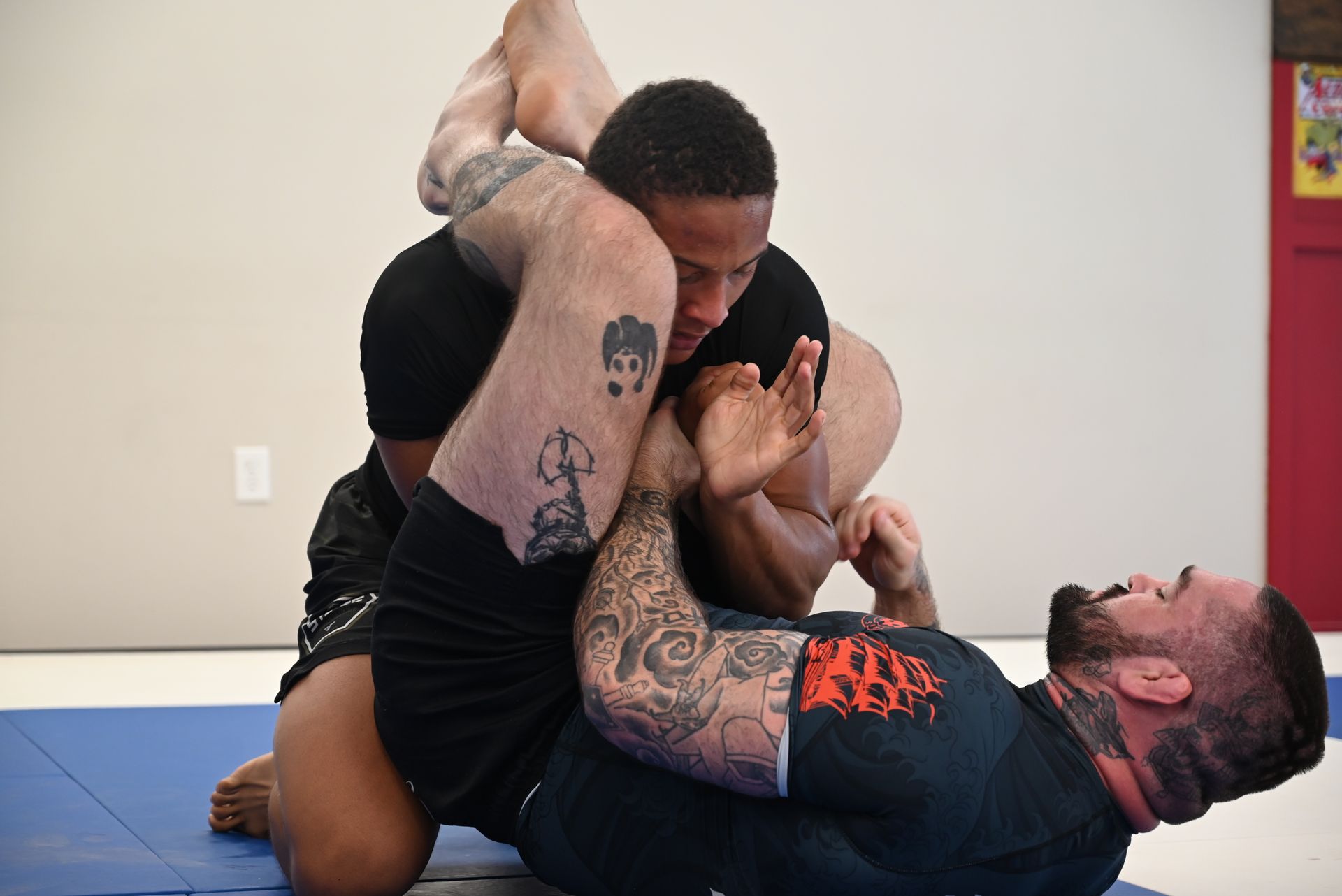
Adult Jiu-Jitsu turns uncertainty into a plan you can practice, pressure-test, and trust.
Adult Jiu-Jitsu is growing fast nationwide, and we see why the moment a new student steps on the mats: it is practical, challenging, and surprisingly approachable once you know what to focus on first. If you live or work in Perry, training can feel even more relevant because you want skills that fit real life, not a fantasy scenario that disappears the second someone resists.
Our goal is simple: help you build real-world ability one layer at a time. That means learning how to stay safe, control the space, and make good decisions under pressure, while improving fitness and confidence along the way. Plenty of our adult students start with busy schedules, old injuries, or zero combat sports background, so we teach in a way that respects your starting point and still moves you forward.
In this guide, we will walk you through a step-by-step path we use for adult Jiu-Jitsu in Perry, GA, from your first class through the skills that matter when the pace picks up.
Why Adult Jiu-Jitsu works for real-world problem solving
If you have ever watched Brazilian Jiu-Jitsu, you have probably noticed something important: it is not based on being the biggest or the fastest. It is based on controlling positions, managing distance, and using leverage. That is a big reason Brazilian Jiu-Jitsu has exploded in popularity, with millions of practitioners worldwide and major growth in the U.S. over the last decade.
For adults, the appeal is more than technique. In surveys across the sport, many practitioners report large confidence gains after consistent training, plus better problem-solving. That makes sense to us because every round is a live puzzle. You try something, it fails, you adjust, you breathe, you keep going. Over time, that habit shows up in daily life in a quiet way.
Real-world skill, though, is not magic. It is built through progressive training, and it starts with a foundation you can actually remember when your heart rate climbs.
Step 1: Start smart with expectations, safety, and the right pace
Your first few weeks matter because they set the tone for everything that follows. Newer grapplers tend to get banged up most often in training, not because Jiu-Jitsu is reckless, but because beginners sometimes go too hard too soon or move in unfamiliar ways. We prevent that with structure, coaching, and clear standards for how to train with a partner.
Here is what we want you to know from day one:
• You do not need to be in shape before you start, because training is what builds your conditioning.
• You do not need to “win” rounds in the beginning, because early success is learning positions and staying calm.
• You do need to communicate, tap early, and treat training partners like teammates, not opponents.
When you train at the right pace, your body adapts, your cardio improves, and your confidence builds in a way that feels steady instead of chaotic.
Step 2: Learn survival first, because control beats chaos
In the real world, most people are not trying to trade fancy moves. Most problems come down to balance, grips, and pressure. So we prioritize survival skills early: how to breathe, how to frame, and how to stop someone from settling their weight on you.
The three positions we want you to recognize quickly
We teach beginners to spot a few core positions fast because recognition reduces panic. When you know where you are, you can choose what to do next.
• Mount: someone sits on your torso with control
• Side control: someone pins your shoulders and hips from the side
• Closed guard: you are on bottom with your legs wrapped around your partner
If you can name the position, you can start using the right escape. That is a small thing, but it changes everything.
Escapes are not “plan B,” they are the foundation
A lot of adults come in wanting submissions right away, which is understandable. But we build escapes first because they create confidence under pressure. Once you can consistently escape mount and side control, you stop feeling trapped. And when you stop feeling trapped, you start learning faster.
Step 3: Build a base of movement that protects you and helps you attack
Jiu-Jitsu in Perry, GA should make you more capable, not just more tired. So we focus on movement skills that carry across every position: hip escapes, bridging, technical stand-ups, and safe ways to change levels. This is the part that sneaks up on you. One day you realize you got up off the floor without thinking, or you caught yourself from a fall more smoothly. It is not flashy, but it is real.
This step is also where many adults start noticing fitness changes. The cardio improves, yes, but so does your ability to hold good posture under pressure and keep moving when you would normally quit.
Step 4: Add takedowns and standing awareness without making it complicated
A lot of real-world situations start standing, and modern competition trends reflect that too. At elite events, wrestling-style takedowns have become more common, and we incorporate that reality in a way that fits adults.
We teach standing skills with safety and context:
• How to break grips and protect your posture
• How to pummel for inside control and manage distance
• How to fall safely and get back up
• How to finish simple takedowns without slamming
• How to disengage when disengaging is the smart choice
For Adult Jiu-Jitsu, this step is less about becoming a full-time wrestler and more about being hard to knock down, hard to hold, and calm on your feet.
Step 5: Pressure-test with controlled sparring that matches your level
You can drill technique all day, but you only own it when you can hit it against resistance. That is why we use progressive live training. Some rounds are positional, meaning you start in a specific spot and work one goal. Some rounds are lighter and technical. Over time, you earn more intensity.
If you are new, this is where you learn an important lesson: effort is not the same as effectiveness. You can be exhausted and still be doing the wrong thing. So we coach you toward small wins, like improving your frames, keeping your elbows safe, or escaping one extra time per round.
That is how Adult Jiu-Jitsu becomes a real skill, not just exercise.
Step 6: Focus on high-percentage finishes and the control that makes them possible
Submissions are part of the art, but we teach them as a result of position, not as a scramble for a quick tap. In high-level competition, chokes consistently show up as the most common finishing category, and for good reason: they work when your control is tight and your mechanics are clean.
What we emphasize when teaching submissions
We coach details that make techniques safer and more reliable:
• Hand fighting before you commit to a choke
• Head and hip positioning to prevent escapes
• Transitions that keep you on top when your first attempt fails
• When to switch to control instead of forcing a finish
This approach makes your training feel less random. You start to understand why something works, not just how to copy it.
Step 7: Train with a schedule that fits adult life in Perry
Consistency beats intensity for adults. Two to three classes per week is enough for real progress if you show up, ask questions, and stay patient. We design our class schedule with working adults in mind, including evening options that fit commutes and family routines.
If you miss a week because life happens, you are not “behind.” You come back, you review fundamentals, and you keep stacking good sessions. That is the real secret: you do not need perfect momentum, you need a long enough timeline.
What your first 6 months can look like, step by step
Progress in adult Jiu-Jitsu in Perry, GA should feel measurable. Here is a realistic six-month roadmap we often see when students train consistently and keep their ego in check:
1. Weeks 1 to 4: Learn basic positions, tapping habits, and one or two core escapes you can repeat under pressure.
2. Weeks 5 to 8: Add guard retention and simple guard passes, plus stand-up basics like grip breaks and safe falls.
3. Months 3 to 4: Connect escapes into reversals, start attacking with a small set of submissions, and improve round pacing.
4. Months 5 to 6: Develop an “A-game” from one top position and one bottom position, and pressure-test it in live rounds.
5. Ongoing: Refine details, improve conditioning, and build confidence that carries outside the gym.
This is not a promise of belt promotions on a calendar. It is a practical way to think about skill development so you can notice real change.
Gi and no-gi: which one is better for real-world skills?
We train with an eye on what works. The gi teaches gripping, posture, and patience, while no-gi often increases the pace and emphasizes wrestling-style control. Elite results still show strong gi foundations even in no-gi formats, which matches what we see on the mats: solid fundamentals travel.
If your goal is real-world ability, we recommend experiencing both over time. Clothing changes, friction changes, and speed changes, but body positioning and control remain the core. Adult Jiu-Jitsu is not about picking a side. It is about building a complete base.
Common concerns we hear from adults, answered plainly
How long does it take to get good?
You can build useful skill within a few months if you train consistently. Black belt timelines vary, but many averages land in the multi-year range with regular practice. What matters more is what you can do today that you could not do last month.
Is it safe?
Any contact sport has risk, but we reduce it with coaching, controlled intensity, and a culture where tapping early is normal. The more experience you gain, the better you get at protecting yourself.
Can women train comfortably and effectively?
Yes. Women’s participation has grown significantly in the last decade, and Adult Jiu-Jitsu is well suited to technique-driven training. We keep the environment structured and respectful so you can focus on learning.
Do I need to compete?
No. Competition is an option, not a requirement. Some adults enjoy it as a way to test themselves. Others train purely for self-defense, fitness, and stress relief.
Take the Next Step
Building real-world skill is not about collecting moves, it is about developing calm, repeatable habits under pressure. When you train with a clear progression, you get stronger, more capable, and more confident in a way that is hard to fake and even harder to lose.
That is exactly what we coach every day at B-52 Jiu-Jitsu Academy: Adult Jiu-Jitsu that meets you where you are and guides you, step by step, toward real ability you can use. If you are ready to start in Perry, we will make the first day simple and the path forward clear.
Put these techniques into practice by joining a Jiu-Jitsu class at B-52 Jiu-Jitsu Academy.